Homemade Hummus with Tahini — The Way Coastal Grandmothers Have Always Made It
There is a bowl of hummus in my memory that I have been chasing my entire life.
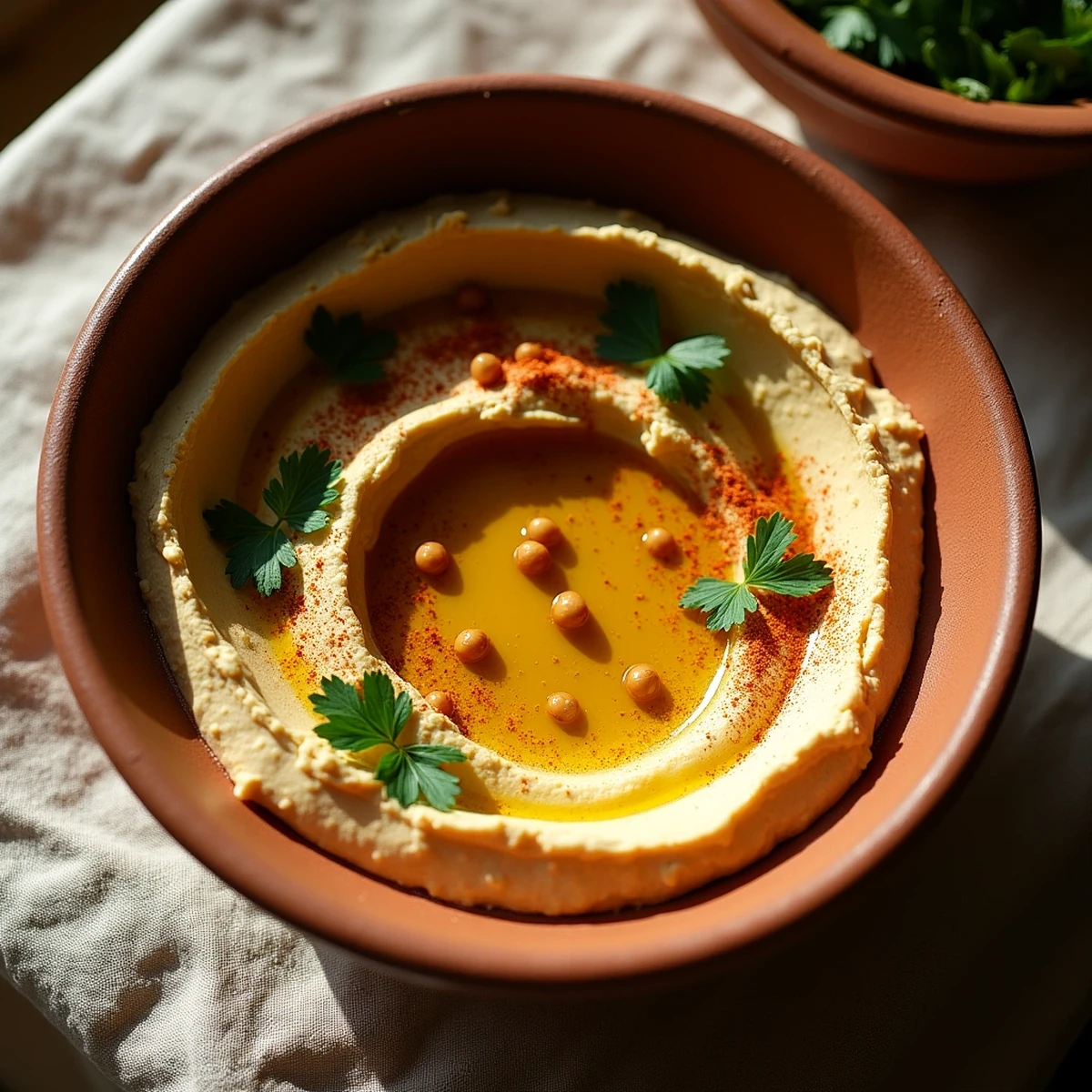
There is a bowl of hummus in my memory that I have been chasing my entire life. It belonged to an old woman named Yiayia Stavroula who lived in a whitewashed house above the harbor in a small Greek village, and she made it every Friday morning without fail. She kept a ceramic pot of chickpeas soaking on the windowsill every Thursday night, and by the time the fishing boats came back in, her kitchen smelled of toasted sesame and lemon and something warm and ancient that I still cannot quite name.
Homemade hummus with tahini is one of those recipes that looks so simple on paper that people are tempted to skip making it altogether — why bother, they think, when the grocery store shelves are full of plastic tubs? But cara mia, once you taste hummus made fresh at home, made the way Yiayia Stavroula made it with good tahini and the juice of a real lemon, you will understand immediately why she never once bought a container in her life. The difference is not subtle. It is the difference between a letter written by hand and one printed by a machine.
Across every Mediterranean coast — from the Greek islands to the Lebanese hillside villages to the terraces of Turkish harbor towns — hummus is not a dip. It is an act of hospitality. It is what you set on the table before anything else, a gesture that says: sit down, you are welcome here, let us begin. Served as part of a mezze spread with warm flatbread, olives, and a drizzle of your finest olive oil, it is a complete expression of the Mediterranean spirit. And it takes barely twenty minutes to make from a can of chickpeas, less if you count the soaking of dried ones as the work of the previous evening rather than today.
This recipe is my attempt to give you Yiayia Stavroula’s bowl. The secret, as she told me once while wiping her hands on her apron, is cold water and patience — you must blend it long enough to let the tahini fully surrender into the chickpeas. She laughed when she said it, as grandmothers do when they reveal the thing that seems too simple to be true.
Ingredients
- 1 can (400g / 15 oz) chickpeas, drained, liquid reserved
- 3 tablespoons cold water, plus more as needed
- 3 tablespoons fresh lemon juice (about 1 large lemon)
- 3 tablespoons good-quality tahini
- 1 small garlic clove, roughly chopped
- 2 tablespoons extra-virgin olive oil, plus more for serving
- 1/2 teaspoon fine sea salt, plus more to taste
- 1/4 teaspoon ground cumin
- Smoked paprika and fresh flat-leaf parsley, to finish
Instructions
- Peel the chickpeas if you have the patience for it — Yiayia Stavroula always did, and it makes the hummus remarkably silky. Simply pinch each chickpea between your fingers and the skin slips right off. Set aside a small handful of whole chickpeas for garnish.
- Add the tahini and cold water to the bowl of a food processor. Process for one full minute until the tahini turns pale and fluffy. This step is the one most people skip, and it is the one that matters most.
- Add the lemon juice and chopped garlic to the whipped tahini. Process for another 30 seconds until well combined. Taste — it should be bright and nutty.
- Add the drained chickpeas, olive oil, salt, and cumin. Process for 2 full minutes, scraping down the sides once halfway through. The long blend is what gives you that cloud-soft texture.
- With the processor running, add cold water one tablespoon at a time until the hummus reaches a consistency you love — spoonable and soft, like very thick cream. Taste and adjust salt or lemon as needed.
- Spoon the hummus onto a wide, shallow bowl. Use the back of a spoon to swirl a well in the center. Drizzle generously with olive oil, scatter the reserved whole chickpeas, dust with smoked paprika, and finish with torn flat-leaf parsley.
- Serve immediately with warm flatbread, or press a piece of parchment against the surface and refrigerate for up to four days. The flavor deepens and improves by the next morning.
Nutrition
Tips
Nonna always said the tahini must go first — before the chickpeas, before the lemon, before anything. Whipping the tahini alone with cold water creates a light, aerated base that gives the finished hummus that impossibly smooth texture you find in the best mezze restaurants. Do not rush this step.
If you would like to make this with dried chickpeas rather than canned, soak 200g overnight, then boil with half a teaspoon of baking soda until very tender — almost falling apart. The softer the chickpea, the creamier the hummus. This is the way Stavroula always did it, though she would not judge you for reaching for a can on a Tuesday evening.
For a hummus with a little more warmth, add a pinch of cayenne with the cumin, or stir a spoonful of roasted red pepper paste through the finished bowl. Mediterranean grandmothers are nothing if not adaptable to what the season provides.