Greek Lemon Chicken: A Coastal Grandmother's Timeless Recipe
There is a dish that every Greek grandmother keeps close to her heart — one she makes without measuring, guided only by memory and the scent of lemons drifting through an open window.
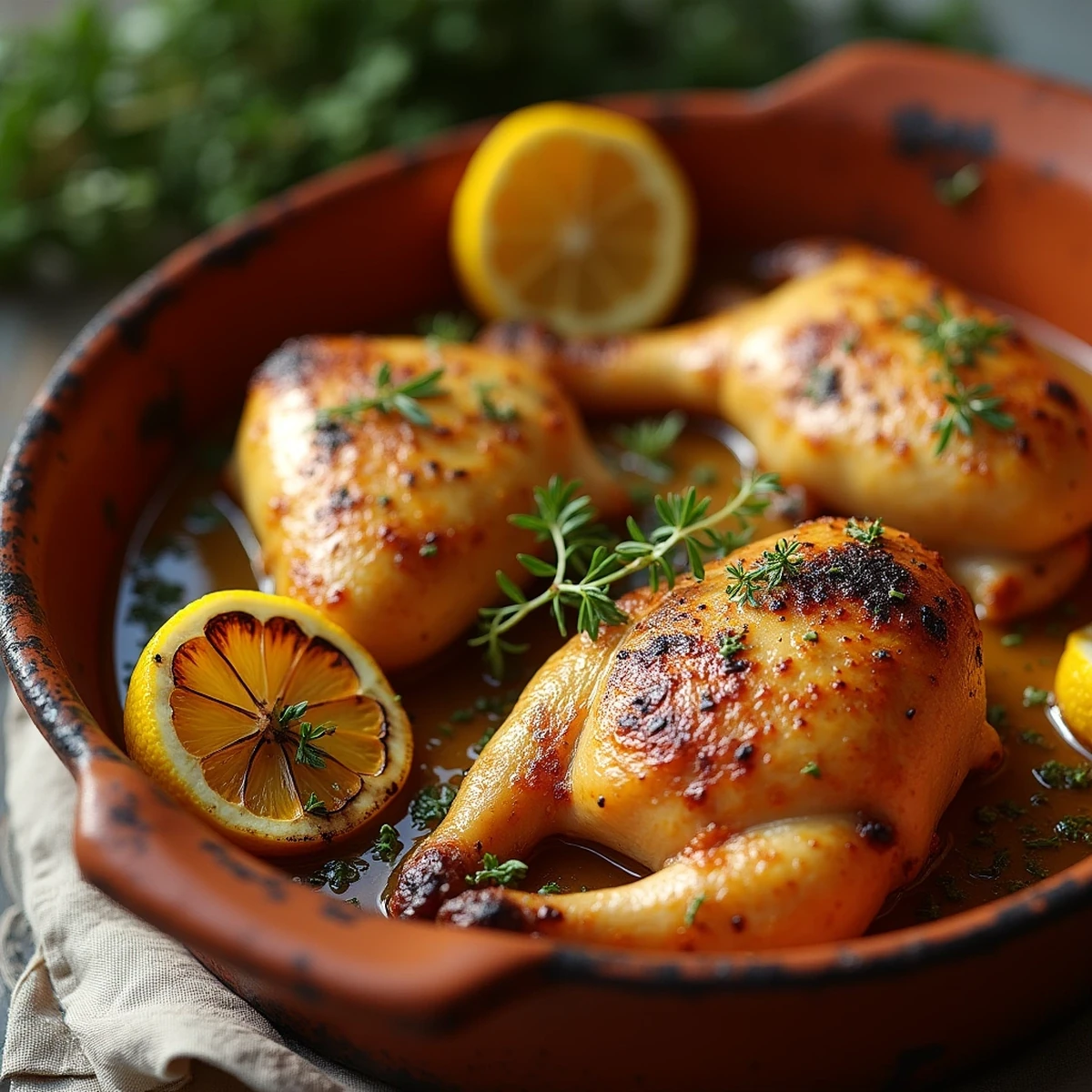
There is a dish that every Greek grandmother keeps close to her heart — one she makes without measuring, guided only by memory and the scent of lemons drifting through an open window. Greek lemon chicken, or what the old women of the Aegean coast simply call “the chicken,” is that dish. It is the one that brings sons home from the city and makes grandchildren sit still at the table. In my travels along the Peloponnese coast, I watched Kyria Eleni prepare it on a Tuesday afternoon as though it required no special occasion, because, she told me, “good food should never wait for a reason.”
The secret, as with so many Mediterranean recipes, is not technique but trust — trust in the lemon, trust in the olive oil, and trust in time. The chicken is bathed in a marinade of bright citrus, wild oregano, and golden olive oil, then roasted slowly until the skin pulls away from the bone and the pan juices become something almost holy. You will want to mop every last drop with a torn piece of bread, and Kyria Eleni would approve of that entirely.
This is not a recipe that demands perfection. It asks only that you use a good lemon — one that feels heavy in your hand and smells like sunshine when you press the peel — and that you give the chicken enough time in the oven to relax and surrender its juices. The result is deeply savory, tangy, and tender in a way that feels both ancient and immediately comforting. It is Mediterranean cooking at its most honest: a few beautiful ingredients, treated with patience and love.
Whether you are cooking for a quiet Sunday family dinner or bringing a taste of the Greek coast to a weeknight table, this Greek lemon chicken will not disappoint. It is the kind of meal that silences a room — not because it is showy, but because it is deeply, unmistakably right.
Ingredients
- 1 whole chicken (about 4 lbs), cut into bone-in pieces, or 4 bone-in, skin-on chicken thighs and drumsticks
- 1/3 cup extra-virgin olive oil
- 1/2 cup freshly squeezed lemon juice (about 3 lemons)
- Zest of 1 lemon
- 6 cloves garlic, minced
- 2 teaspoons dried Greek oregano (or 1 tablespoon fresh oregano, chopped)
- 1 teaspoon sea salt, plus more to taste
- 1/2 teaspoon freshly ground black pepper
- 1/2 cup chicken broth or water
- 1 lemon, thinly sliced, for roasting
Instructions
- In a large bowl, whisk together the olive oil, lemon juice, lemon zest, minced garlic, oregano, salt, and black pepper to form the marinade.
- Add the chicken pieces to the bowl and turn them well to coat on all sides. If you have the time, cover and refrigerate for at least 30 minutes — or overnight for the deepest flavor. Kyria Eleni always said a patient cook is a wise cook.
- When ready to roast, preheat your oven to 400°F (200°C).
- Arrange the marinated chicken pieces skin-side up in a single layer in a large roasting pan or baking dish. Pour any remaining marinade over the top.
- Add the chicken broth to the bottom of the pan to prevent the juices from burning and to create a savory base for basting.
- Lay the lemon slices over and around the chicken pieces.
- Roast uncovered for 45 minutes, then baste the chicken with the pan juices using a spoon or brush.
- Continue roasting for another 25-30 minutes, until the skin is deeply golden and caramelized and the juices run clear when the thickest part of the thigh is pierced with a knife. An internal temperature of 165°F confirms it is ready.
- Remove the pan from the oven and let the chicken rest for 5-10 minutes before serving. Spoon the golden pan juices generously over each piece.
- Serve with crusty bread, roasted potatoes, or a simple green salad, and do not neglect to offer the roasted lemon slices — they become wonderfully soft and slightly sweet and are a small treasure on the plate.
Nutrition
Tips
Nonna’s first truth: always use bone-in, skin-on chicken pieces here — the bones give flavor to the pan juices and the skin becomes a glorious golden shell that protects the meat’s tenderness. Boneless chicken breasts will dry out and miss the whole soul of the dish. Her second truth: do not skip the resting time after the oven. Those quiet minutes allow the juices to settle back into the meat, and it is the difference between chicken that is merely cooked and chicken that is truly ready. Finally, if your pan juices look thin after roasting, pour them into a small saucepan and simmer over medium heat for three or four minutes — they will thicken into a bright, lemony drizzle worthy of any coastal grandmother’s table.