Italian Pasta Aglio e Olio: The Midnight Dish Every Nonna Keeps Secret
There is a dish in southern Italy that grandmothers make without measuring, without thinking — fingers moving from memory, eyes watching the garlic as it turns the color of old gold.
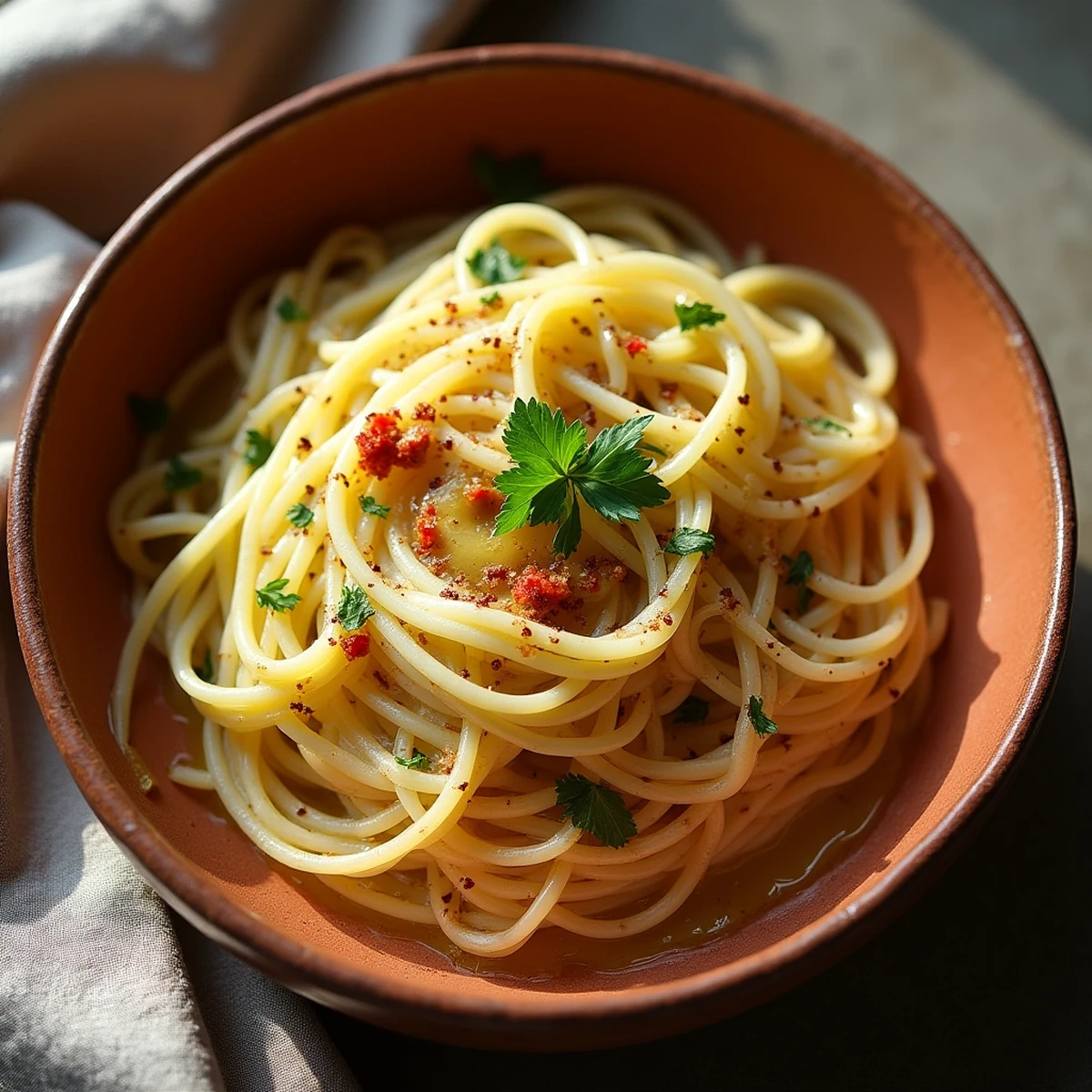
There is a dish in southern Italy that grandmothers make without measuring, without thinking — fingers moving from memory, eyes watching the garlic as it turns the color of old gold. Italian pasta aglio e olio is that dish. Just spaghetti, garlic, olive oil, and chili flakes, and yet it carries within it the entire philosophy of coastal Italian cooking: that when your ingredients are honest, simplicity becomes something sacred.
I first tasted aglio e olio at two in the morning, in a tiny Neapolitan kitchen that smelled of sea air and garlic. A fisherman’s daughter named Carmela had been awake since four the previous morning, and she cooked this pasta with the calm efficiency of someone who had made it a thousand times. She said her mother called it ‘cucina povera at its most glorious’ — the food of the poor, elevated by patience and good oil. The pasta was silky, fragrant, and utterly alive. I have never forgotten it.
What makes this Italian pasta aglio e olio truly special is the technique, not the ingredient list. The garlic must be coaxed, never rushed. The oil must be the best you own — this is not the place for the bottle you keep for frying. And the starchy pasta water is not an afterthought; it is the secret that transforms oil and garlic into something almost creamy, something that clings to each strand of spaghetti like a whispered promise.
Make this on a weeknight when you are tired and the pantry feels bare. Make this at midnight when friends arrive unexpectedly. Make this whenever you need a reminder that the most beautiful food asks very little of you, only your attention and your love.
Ingredients
- 400g (14 oz) spaghetti or spaghettoni
- 8 large cloves garlic, thinly sliced
- 120ml (½ cup) extra-virgin olive oil, the best you have
- 1 teaspoon dried red chili flakes (peperoncino), or to taste
- 1 large bunch flat-leaf parsley, leaves finely chopped (about ½ cup)
- Salt, for the pasta water (generous — the water should taste of the sea)
- Freshly ground black pepper, to taste
- Optional: a small handful of finely grated Pecorino Romano or Parmigiano-Reggiano
Instructions
- Bring a very large pot of water to a rolling boil. Salt it generously — Carmela used to say it should taste like the Tyrrhenian Sea. Add the spaghetti and cook until just shy of al dente, about 1–2 minutes less than the package directs. Before draining, scoop out at least 1½ cups of the starchy pasta water and set it aside. This water is your most important ingredient.
- While the pasta cooks, place a large, wide skillet over medium-low heat. Add the olive oil and let it warm gently — you are not frying, you are coaxing. Add the sliced garlic in a single layer and let it sizzle very quietly in the oil. Watch it as you would watch a sleeping child: with patience and full attention.
- After about 6–8 minutes, when the garlic is pale gold and fragrant — not brown, never brown — add the chili flakes. Stir and let them bloom in the oil for 30 seconds. Remove the pan from the heat if the garlic is coloring too quickly. Patience here is everything.
- Add the drained spaghetti directly to the skillet. Return the pan to medium heat. Add a generous splash — about ½ cup — of the reserved pasta water and begin tossing the pasta with tongs or two forks. The starch in the water will begin to emulsify with the oil, creating a light, silky sauce that clings to every strand.
- Continue tossing and adding pasta water a splash at a time until the sauce is glossy and the pasta is perfectly al dente, another 1–2 minutes. The pasta should look lightly coated and glistening, never dry, never soupy.
- Remove from heat and add the chopped parsley. Toss once more with a generous crack of black pepper. Taste and adjust salt. If using cheese, scatter it over now — though many coastal Italians consider this optional, a matter of personal conviction.
- Serve immediately in warm bowls. Aglio e olio waits for no one. Carry it to the table the moment it is ready, while it still steams and the garlic perfume fills the room.
Nutrition
Tips
Nonna’s first rule: the garlic must never darken past pale gold. The moment it crosses into brown, it turns bitter and all your effort is undone. If you feel it moving too fast, lift the pan from the heat — the residual warmth will finish the job gently. Trust your nose as much as your eyes; when the kitchen smells sweetly of garlic rather than sharply of it, you are at the right moment.
The pasta water is not optional — it is the technique. Without its starch, the olive oil simply slides off the pasta and pools at the bottom of the bowl. Add it gradually, tossing constantly, and watch the transformation happen. This is the secret that separates a beautiful aglio e olio from a greasy one.
For the oil, think of this: you are serving it barely cooked, so its flavor will be fully present. Use the olive oil you save for salads and good bread, the one with the green-gold color and the peppery finish. The dish has only a handful of ingredients — each one must be the best version of itself.