Lebanese Fattoush Salad: A Fresh Herb Salad from Grandmother's Coastal Kitchen
There is a salad that Lebanese grandmothers have been making for as long as anyone can remember — not from a recipe written down, but from instinct, from memory, from the garden just outside the kitchen door.
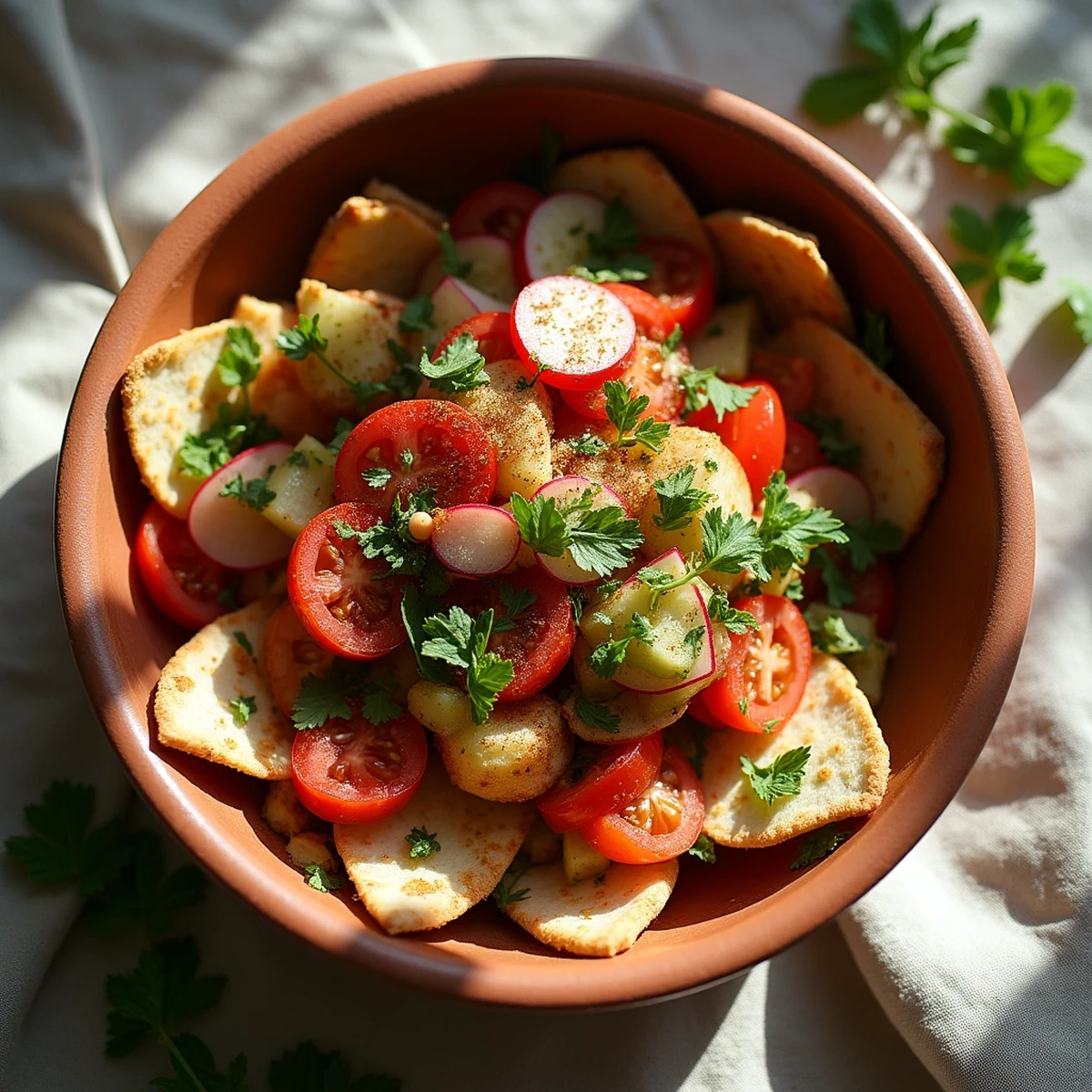
There is a salad that Lebanese grandmothers have been making for as long as anyone can remember — not from a recipe written down, but from instinct, from memory, from the garden just outside the kitchen door. Fattoush is that salad. It is not complicated, cara mia, but it is alive with flavor in a way that only the simplest things can be. Crisp toasted bread, a handful of fresh herbs, vegetables still warm from the sun, and a dressing that sings with sumac and lemon. Every bite tastes like a summer afternoon by the sea.
I first encountered this salad at the table of a Lebanese neighbor whose mother had made it every Friday without fail. She told me that fattoush was never the same twice — it changed with the season, with what the garden gave, with what bread was left from the week. ‘The bread is never wasted in our kitchen,’ she said, pressing a piece of warm pita into my hand. That is the coastal grandmother’s way: nothing wasted, everything transformed into something beautiful.
What sets a true Lebanese fattoush apart from an ordinary chopped salad is the sumac — that deep, brick-red spice with its bright, tart flavor that coats every leaf and crouton with something almost magical. It is the taste of the Levantine coast, of stone terraces and fig trees and the particular quality of light that falls over Lebanon in late afternoon. If you have never cooked with sumac before, this salad will make you wonder how you lived without it.
This recipe is generous, the way all good Mediterranean salads should be. It comes together in twenty minutes and feeds a table of four with ease. Serve it alongside grilled fish or roasted chicken, or simply on its own with a glass of cool water and good company. That is all it has ever needed.
Ingredients
- 2 rounds of pita bread, day-old if possible
- 3 tablespoons olive oil, divided
- 1 teaspoon sea salt, divided
- 4 ripe Roma tomatoes, chopped into chunks
- 1 large English cucumber, diced
- 1 green bell pepper, diced
- 4 radishes, thinly sliced
- 4 spring onions, thinly sliced
- 1 cup fresh flat-leaf parsley leaves, roughly torn
- 1/2 cup fresh mint leaves, roughly torn
- 1/4 cup fresh purslane or watercress (optional, but traditional)
- 2 tablespoons sumac, plus more for serving
- 3 tablespoons fresh lemon juice
- 1 small garlic clove, finely grated
- 1/2 teaspoon dried mint
Instructions
- Tear the pita bread into rough, generous pieces — not too small, you want them to hold their own against the vegetables. Toss them with 2 tablespoons of the olive oil and a pinch of salt.
- Warm a large dry skillet or cast iron pan over medium-high heat. Add the pita pieces in a single layer and toast, turning occasionally, for 3 to 5 minutes until golden and crisp at the edges but still slightly chewy in the center. Set aside to cool.
- In a large serving bowl, combine the tomatoes, cucumber, green pepper, radishes, and spring onions. Add the parsley, mint, and purslane if using. Toss everything gently together.
- In a small bowl, whisk together the remaining tablespoon of olive oil, the lemon juice, grated garlic, dried mint, sumac, and the remaining salt. Taste and adjust — it should be bright and tangy.
- Just before serving, add the toasted pita pieces to the bowl. Pour the dressing over everything and toss with care so the bread absorbs the dressing without losing all its crunch.
- Dust with an extra pinch of sumac over the top, the way the grandmothers do — for color as much as flavor. Bring the bowl straight to the table and serve immediately.
Nutrition
Tips
Nonna always said the secret to fattoush is patience at the very end — do not dress and toss the salad until everyone is seated and ready to eat, because the pita loses its lovely texture within minutes of meeting the dressing. If you must prepare ahead, keep the toasted bread separate in a cloth until the last moment.
Sumac is the heart of this salad, and it is worth seeking out at a Middle Eastern grocery or spice shop. Nothing else quite replicates its tangy, almost fruity tartness. If you truly cannot find it, a squeeze of extra lemon will soften the absence, but promise me you will look for sumac — it will change how you cook forever.
For the most authentic flavor, use day-old pita that has dried slightly on the counter overnight. Fresh bread turns soggy too quickly; bread that has rested a day toasts into something with real character — a little chewy, a little crisp, full of personality.